AI is everywhere today. From draining resources so we can see the leader of the free world as Jesus, to being utilised in almost every aspect of modern working life (for better, or most likely in my experience for worse), there’s no escaping it. We feel miles from the idyllic dream of AI improving our lives and letting us just enjoy ourselves as it does all of the hard work for us. However, D-topia aims to give us a view of what that future could look like, and while it may be a bit hopeful, it does at least treat the theme with respect while remembering to acknowledge our humanity’s role in our future.
I’ve maybe started off a bit too aggressive, and if there’s one thing that D-topia isn’t, it is aggressive. It is a marvellously relaxing game, one filled with short and sweet puzzles to solve as we learn more about D-topia, its citizens, and more.
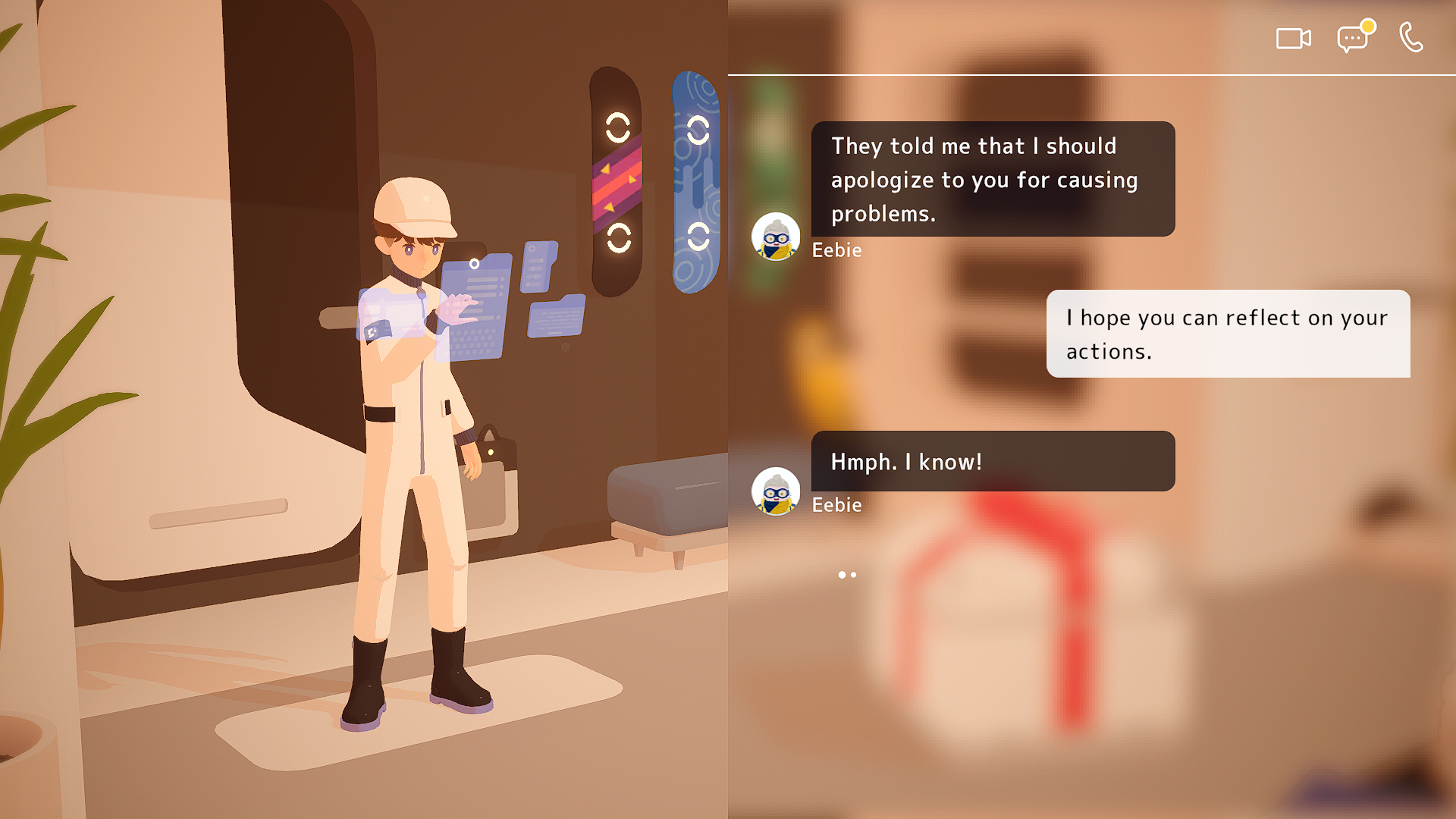
We play as Shiro, a new Facilitator at D-topia. Their job role is to help maintain and fix things around the various areas of the futuristic city, and help the people with any problems. A handyman of the future, if you will. AI controls every aspect of D-topia, from the weather and day night cycle, to the bots and droids that clean, work in shops, and deal with day to day logistics. Shiro is their helping hand in a way, doing what they may not be able to (or fixing them when they break). To help with this, Shiro can enter the Block Space, at which point the AI-generated shiny, pristine exterior of D-topia melts away to show the actual nuts and bolts at work. Previously floating droids are shown to be on wheels, while walls and facades might hide alternate details or pathways. Once again, D-topia is showing that AI can have its uses, but look a little closer and all may not be as rosey as it seems.
D-topia is broken up into seven working days, and during each we explore the city, talking to a handful of residents and going to work. Work involves solving a series of puzzles with the option of overtime should we clear the base batch quickly enough. These puzzles are smartly designed, coming in various forms; sliding number blocks around a patterned area to get them to the designated spot; laying ticks in boxes according to the surround numbers and patterns (in a reverse Minesweeper sort of way); or line puzzles that have various gates and numbers to collect before reaching the end.
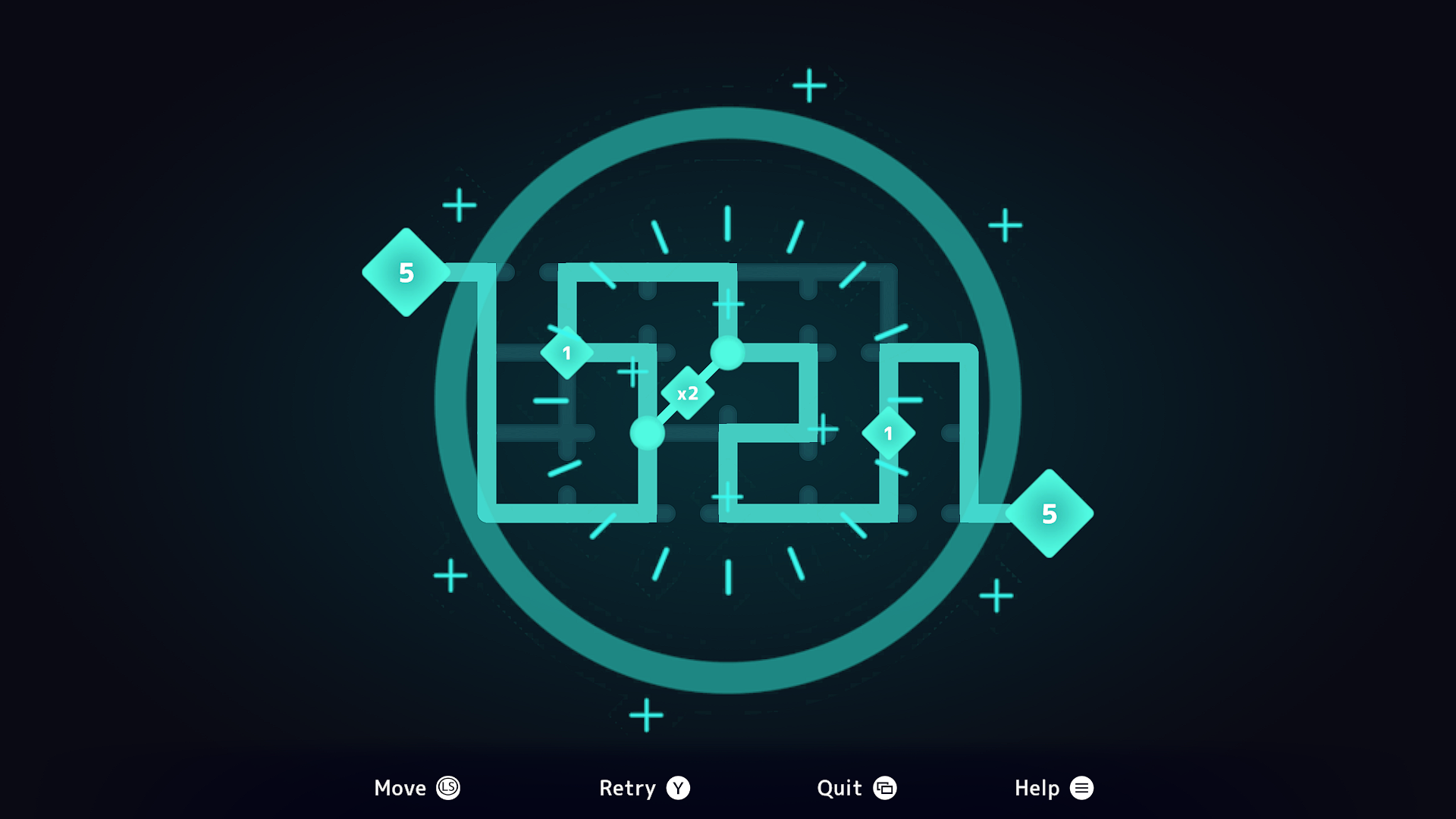
A couple did stump me (and we can skip any that we’re stuck on at penalty of losing our bonus and OT) but generally the difficulty is on the easier side. We can revisit them at any time from our room’s computer as well, and there doesn’t seem to be a story punishment for failing them so don’t fret too much if you just want to progress the rest of the game.
When we’re not working, we’re meeting the cast of characters, engaging in conversations and helping them with problems but solving both choice problems and occasional extra puzzles. For example, Tot is a loveable big guy who, despite knowing it’s bad for him, can’t stop snacking. An implant is his head is causing havoc on his emotions, and so we can help fix bugs to help him quell his urges. Elsewhere, we may need to help a character choose how to approach a big test, or another who needs our specific skillset to be paired with theirs to get their job done.
While there’s no voice acting, the various characters are well written and enjoyable to get to know. We can spend as much time with them as we want, and should we get our relationship level up enough, we can go on extra virtual activities with them from within our home using the virtual tea room. Each represent well various aspects of the future of AI and how it’ll affect humans – the techie who embraces it, the outcast who doesn’t fit into the new ideal, those who seek a form of immortality, etc – and D-topia offers a glance and a chance to see how this may affect us personally.
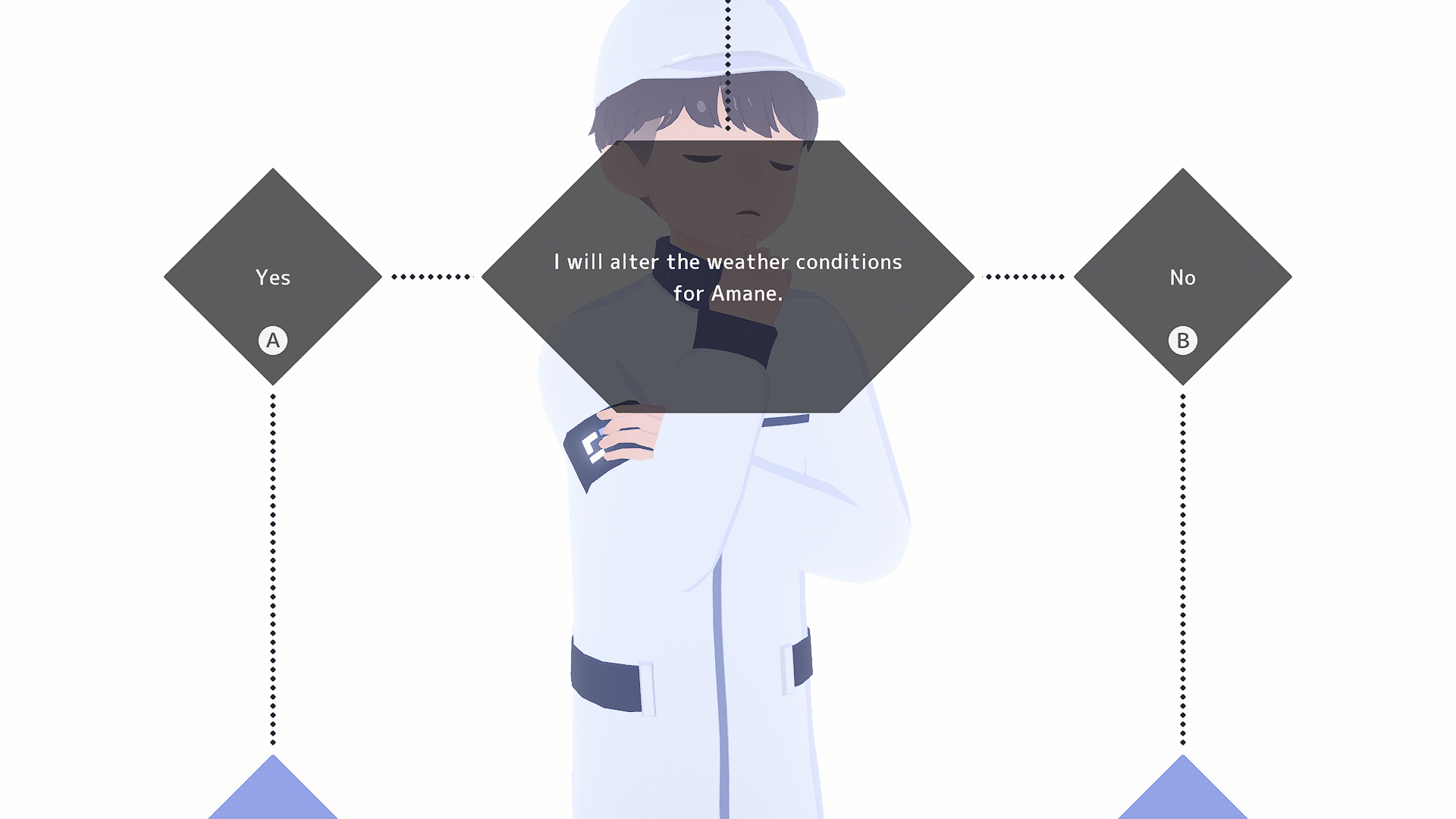
We occasionally get to enter Brain Meetings, a form of analysis for key character choices. We follow a flow chart of yes or no questions, and it’s up to us how to alter the outcome. These are generally simple, though the wording of a few might trip some people up (one or two instances of a double negative giving us pause for example) but it’s an effective way to handle key choices.
My only real downside of D-topia is in some of the extraneous things. We earn money by working and helping people, but all this is used for is to buy food that we don’t really need (we get meals provided every day, and while Shiro may occasionally state that they’re hungry, it doesn’t seem to affect anything) outside of soft drinks that up their run speed so we can explore faster, and items and trinkets for our home that can’t be used. At one point I bought a set of decorative skateboards that are described as “a colorful skateboard collection that you can either display or customize and ride”. But like everything else, once purchased they just sit in our apartment. We can’t even look at them closer or interact with them at all. It’s not the biggest deal breaker, but it would have been nice to be able to use some of the things we bought, even if it’s just a random distraction like playing the piano.
Conclusion
Overall, D-topia has been a refreshing and enjoyable experience. The puzzle difficulty is pitched well for the most part, erring on the easier side to keep things flowing, and interacting with the people of D-topia is rewarding as we get to know and help them. Being able to use items we purchased in any way would have been nice, but it’s a small blemish on what was otherwise a well paced take on AI, and the future of humanity alongside it.
This game was reviewed based on Xbox S|X review code, using an Xbox S|X console. All of the opinions and insights here are subject to that version. Game provided by publisher.