

It’s January, and I hope everyone had a chance to rest, be with family and maybe work on their backlog because the 2026 games are starting to hit. The first 2026 release I’ve played is MIO: Memories in Orbit, and if it is any indication of the quality of games we’ll be receiving, this will be a great year for gaming.
MIO: Memories in Orbit is a Metroidvania with a gorgeous hand-drawn art style and smooth character animations made for hardcore fans of the genre. You play as Mio, a robot that wakes up in a derelict spaceship. Mio’s first task is to discover what has happened to the ship’s AI systems, known as Pearls, that should be up and running. The first character you will encounter is Shii, and you should prioritize getting Shii nacre, the game’s primary currency, either by donating it directly or, more likely, by dropping the nacre you’ve earned when you die. Shii is the “Keeper of the Spine” and before long will give you access to the map of areas you’ve visited.
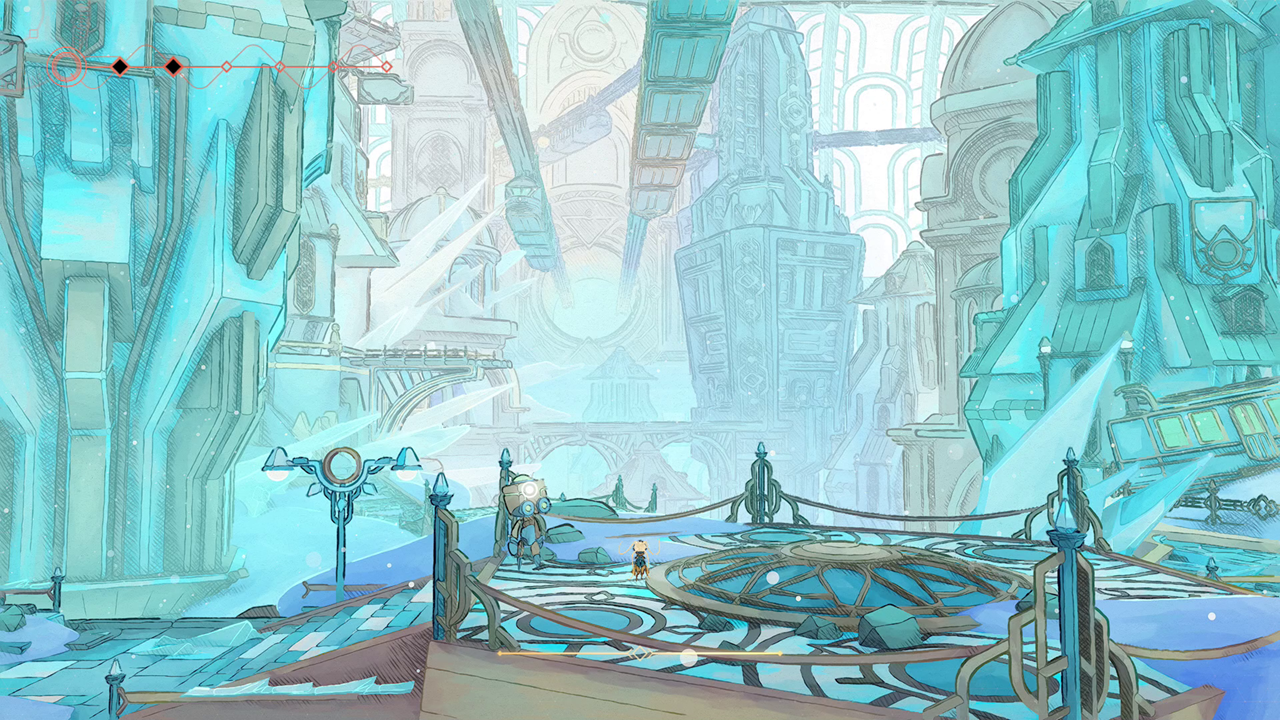
Now that you have your map you can explore more efficiently and see pathways you’ve not yet visited. You’ll quickly find your first boss fight and you’ll probably die. In fact, you’ll probably die a few times. But once you finally defeat the first boss you’ll meet Samsk who provides you with your first mobility upgrade – the Hairpin – which is basically a grappling hook. Every time you get a new mobility upgrade you’ll have to complete a simple 2D tutorial level that requires you to use all of your mobility upgrades up to that point.
You’ll find other kinds of upgrades as well. There are permanent damage upgrades and modifiers that you can equip as long as you have enough capacity in your allocation matrix to power them. There are ways of upgrading your maximum allocation to allow you to have more modifiers active at the same time. You can only change your modifier setup at the Overseer’s Pathways that serve as spawn points when you die as well as fast travel locations. You may find that you prefer one set of modifiers while exploring and another set when you are facing a difficult boss.
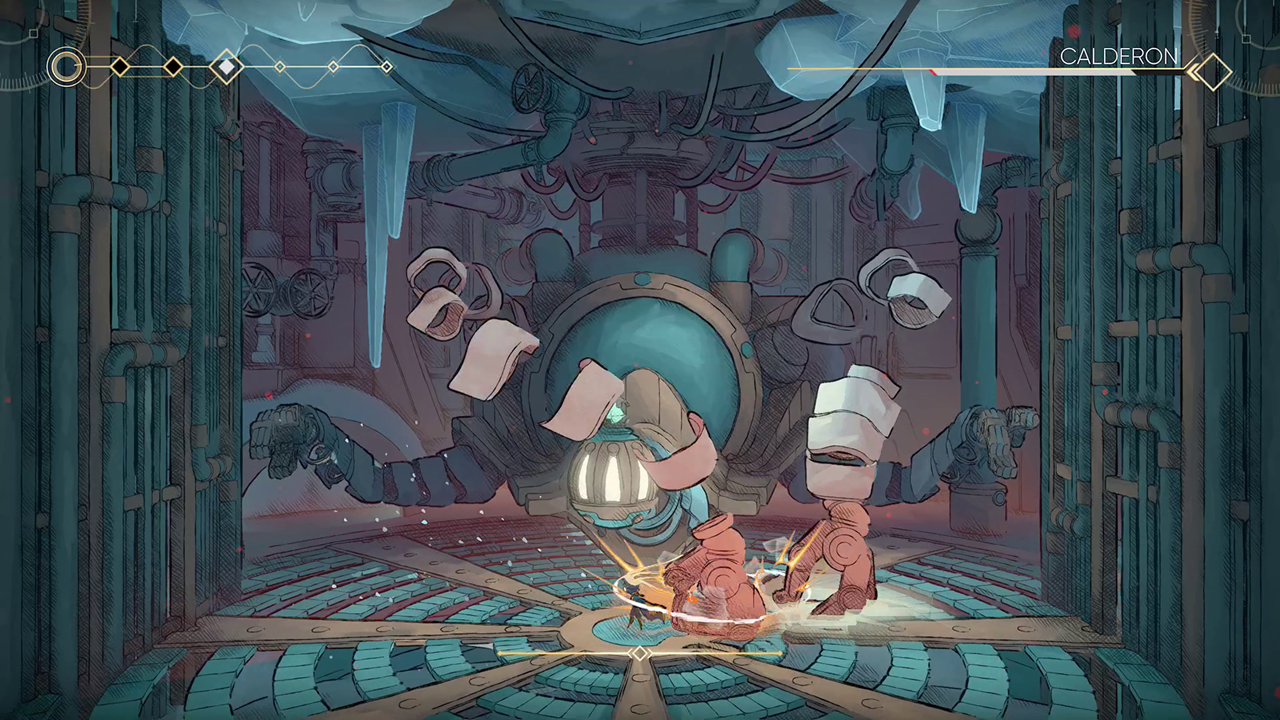
MIO is a game that requires and rewards exploration. There are no blinking beacons on the map telling you where to go. There’s no indicator in the corner of your screen telling you which direction to head. Instead, you are free to go and figure out what to do next all on your own. Thankfully, you do have 16 icons that you can place on the map to remind yourself of that item you can’t reach yet or the pathway you see but have no idea how to get to. While at times you might find this frustrating, it also feels really good when you find an area or a secret shortcut that was hiding in plain sight just waiting to be found. There’s so much exploration baked into this game that even after I rolled credits, I still had new areas to discover. In fact the developer has hinted that there might be a “true ending” that I’m sure I didn’t see.
MIO’s difficult and plentiful bosses feel like their own exploration challenges as you attempt to figure out their attack patterns. If you struggle against the bosses, you can turn on a setting in the accessibility options that weakens the boss a tiny bit each time you fail to beat them. Your explorations will sometimes bring you to areas where you will be required to master all of your movement abilities to proceed. One false move and you’ll lose a health bubble and have to try again, hopefully from a checkpoint. Don’t worry, there’s an accessibility option for that too that provides you with one free health bubble if you stand still for a few seconds. The trade-off of waiting a few seconds before each attempt is worth it to prevent slowly losing health and then having to run back in order to try again.
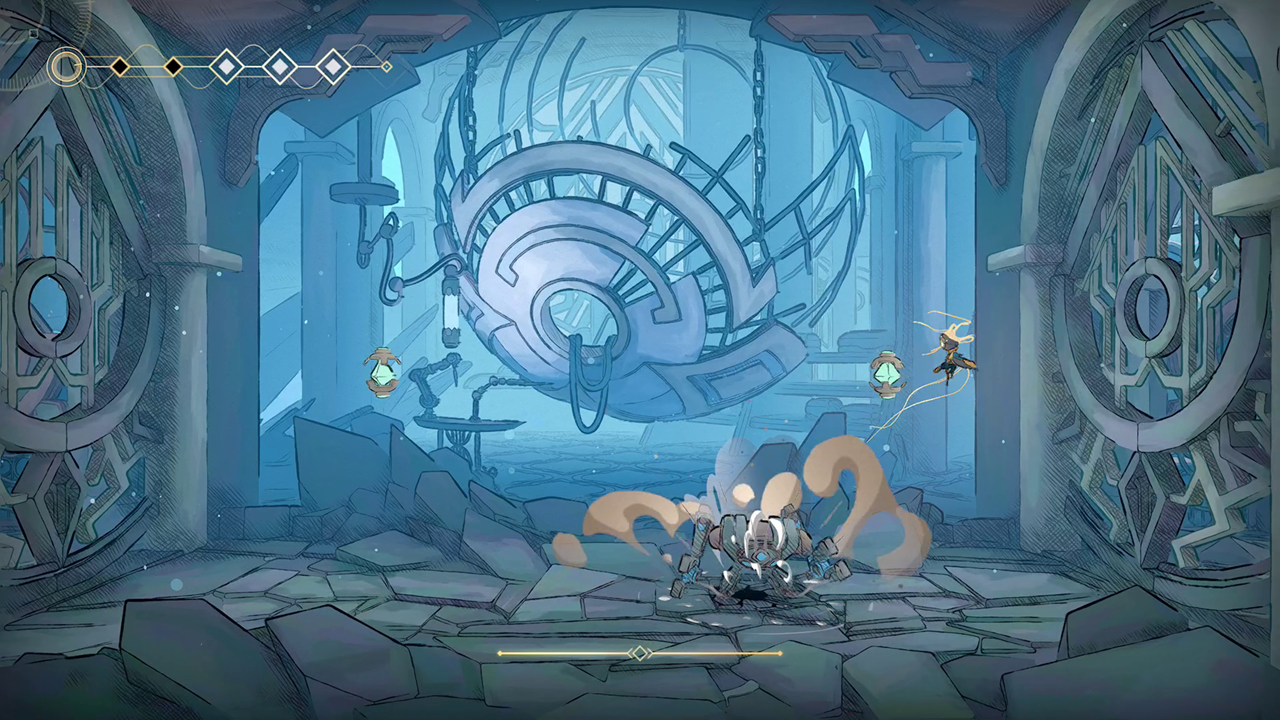
MIO is a beautiful game in action. The movement abilities and the combat look and feel great. The enemy animations, especially the bosses, are smooth and they make me want to go watch someone else play the game so I can fully appreciate all the details. My experience with the game was only marred by two things. While I appreciate the free to explore nature of the game, I do like a little direction to help me to clean up the collectibles I didn’t discover naturally. The other thing that I consider a slight negative was a low gravity area that you probably won’t see until late in the game. The movement abilities in low gravity felt choppy, burning more energy than they would if they worked perfectly, and the exploration felt off. That section of the game is short, has no combat, and is mostly for adding backstory but it feels like an unpolished area of a game that does so much else right.
Conclusion
MIO has a lot of features that other games in the genre introduced and found a way to incorporate and make them shine. The modifier system is similar to Hollow Knight or Ori and the Will of the Wisps. The accessibility option that makes each boss a tiny bit weaker after each failed attempt is similar to Hades. The extended platforming sections of the Ori games and Guacamelee are also present. MIO does a fantastic job of taking all these systems and making them their own while wrapping them up in a huge world to explore. This is Douze Dixièmes’ second game which follows their stunning debut, Shady Part of Me, and I can’t wait to see what they do next.
This game was reviewed based on Xbox S|X review code, using an Xbox S|X console. All of the opinions and insights here are subject to that version. Game provided by publisher.


