At first glance, you might be tempted to make assumptions about Pragmata and imagine similarities to games like Dead Space or Bioshock. After my time with the game, I’m happy to report that Pragmata doesn’t just cut and paste from these worthy titles. Instead, Capcom has done the unexpected and created a new game that stands fully on its own unique systems and story.
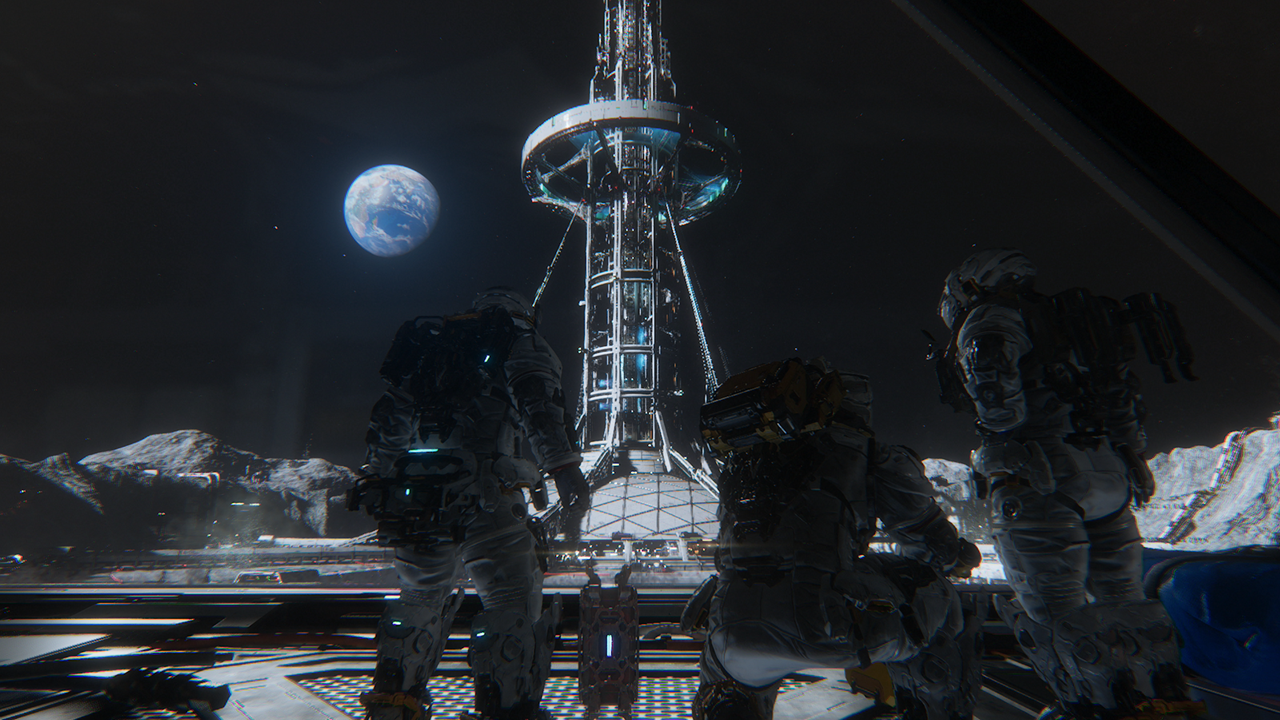
The game begins with you playing as Hugh Williams. You and your team are sent to explore a lunar research facility that has lost contact with the Earth. Shortly after the team’s arrival, a moonquake strikes, damaging the facility and separating Hugh from his team. When Hugh wakes from a fall, he discovers that an advanced android girl, whom he names Diana, has fixed his compromised suit and saved him. Hugh and Diana set off to figure out how to get back to Earth all the while surviving robots that the rogue AI, IDUS, continuously sends after them.
The game plays as a third-person shooter with big, bulky armor and various unique enemy characters. Hugh’s suit may be bulky, but thanks to his ability to run, jump, and use upgradable thruster boosts he’s actually deceptively agile. Diana doesn’t worry about agility, as she spends most of the game attached to Hugh’s back, ready to hack robots and other things in the environment.
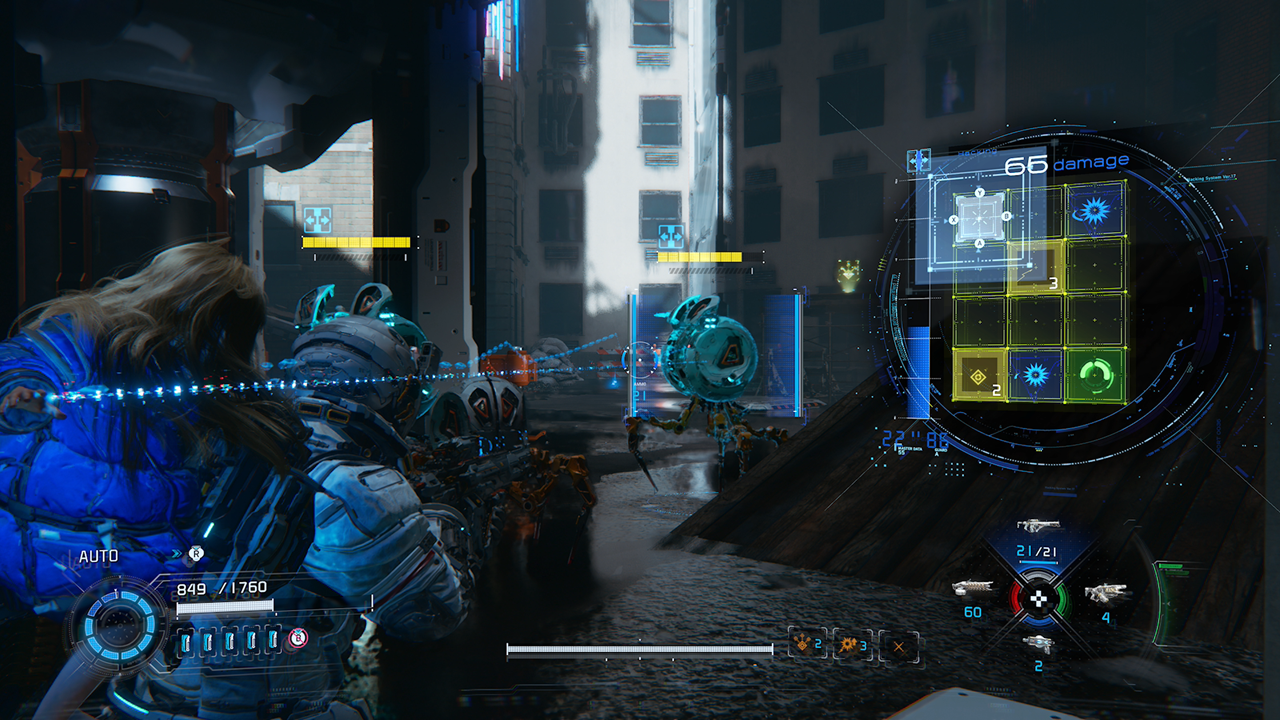
The combat hacking feature is unique from other games in that you are performing the hack at the same time that you’re aiming, shooting, and dodging enemies. Holding down the left trigger will allow you to target a particular robot. When targeting a robot within hacking range, a digital board consisting of squares is overlaid on the top right of the screen. The left stick will allow you to move around the environment while the face buttons, X, Y, A, and B will guide a cursor around the digital board. If you just go straight to the end node, enemies will “open up”, revealing weak points where they take increased gunfire damage. Along the way you can pass through special hacking nodes that add damage or have other special effects on enemies upon reaching the end node. It takes a little time getting used to managing both sets of inputs, but it works! Capcom should be congratulated for creating a brand new gameplay mechanic.
The technical achievement of combining the hacking with third-person combat is really well thought out. But they took it a step further and did an excellent job of continuously adding new ways for the combat to interact with the hacking game. Just when you start to get the hang of the weapons and hacking nodes, you get to a new area with new enemies, new weapons, and new twists on the hacking game.
Now that we’ve gone over the combat and the hacking mechanic, we should talk about the environment. The levels feel like something out of a Souls-like game with their interconnectedness and shortcuts to unlock. That’s where the similarities end, though, as the only penalty from death is that you are returned to the central hub with all of your currency and collectibles intact. While the game does have a map, it is not very helpful in navigating or pointing out collectibles and upgrades. Fortunately for us, the tram that you use from the central hub lists missing collectibles and upgrades for each area. Progressing through the game will also eventually provide you with an ability that makes finding these items less of a chore.
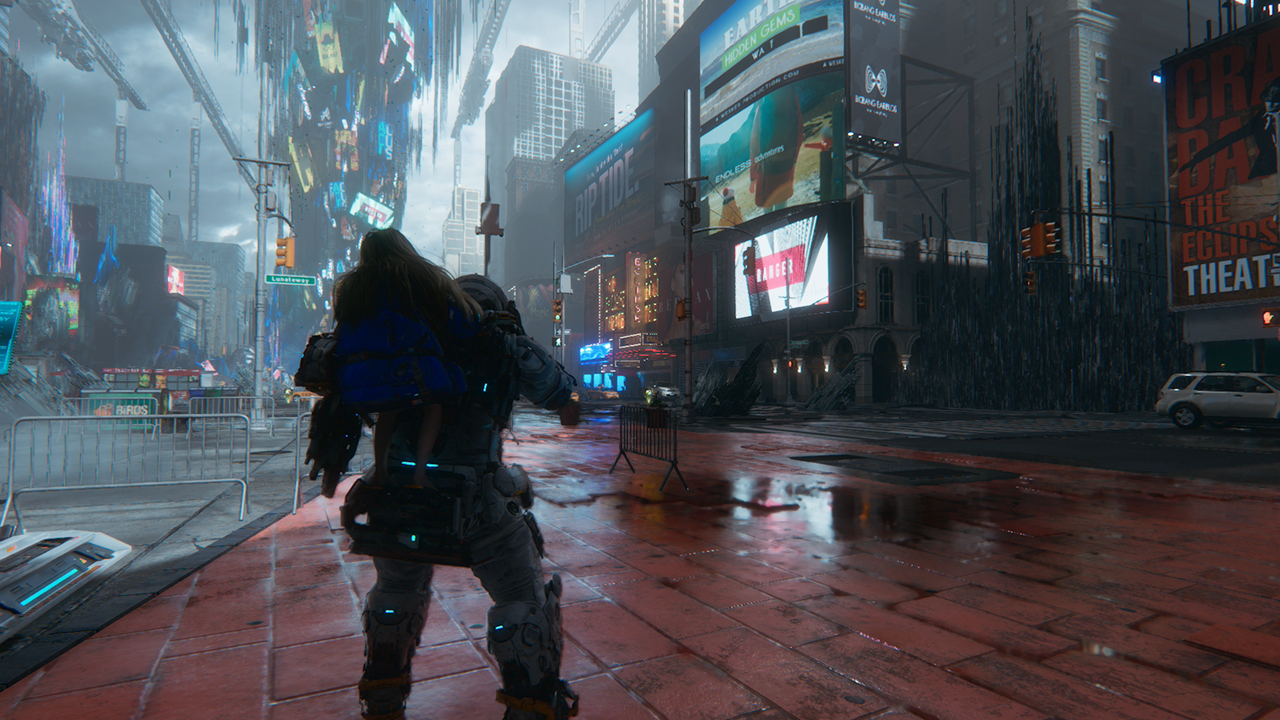
While the moon is a place devoid of color and varying scenery, the lunar base is not. The first area of the game starts off in sterile-looking corridors but it’s not long before you start to see some color and surprising changes in biomes. Thankfully for our attention spans, the research base was experimenting with a substance called lunafilament, which they used to create everything from robots to replicas of locations on Earth and more.
While I won’t go into detail on the story for fear of spoiling it, I do have to mention the evolving relationship between Hugh and Diana. At first Hugh sees Diana as a tool to help him get home, but her curiosity about Hugh, Earth, and humanity quickly changes how Hugh (and very likely the player) sees her. The relationship quickly starts to feel more like a father and his adopted daughter thanks to the conversations they have and the collectibles that Hugh finds to entertain Diana back at the hub.
Conclusion
I was pleasantly surprised by many aspects of Pragmata. First, the constantly evolving and engaging hacking mechanic, then, the creative level design and puzzles, and finally the emotional bond forming between Hugh and Diana. Hopefully we’ll see more from this new, innovative IP in years to come (hopefully with a much-improved map).
This game was reviewed based on Xbox S|X review code, using an Xbox S|X console. All of the opinions and insights here are subject to that version. Game provided by publisher.