I remember the first time I played the Onimusha on the PS2. It was a boozy house party, where someone had just picked up the Sony console with a couple of games. We played Tekken Tag Tournament for a bit but it was the Samurai game that held my attention.
The game managed to feel new while also having some sensibilities left over from the 16bit and PSX era. Instead of combos there were more strict moments to the strikes, and bosses were puzzles instead of excuses for flashy attacks.
I was hooked on the game, and barring one timed sliding puzzle, I didn’t want to put it down.
This new version, Onimusha: Way of the Sword, has much of that DNA, and fortunately it has fewer mandatory timed puzzles.
This new version moves away from the characters of the original 4 games, and focuses on a protagonist fashioned after two legends. The first is the incarnation of his namesake – Musashi Miyamoto – with a replication of his most famous fight with Kojiro Sasuki being the start of the game. In the original story Musashi killed his opponent with sword fashioned out of an oar, here Musashi defeats his opponent but is interrupted by the unleashing of demons. Musashi ends up gaining a gauntlet that enables him to fight back and absorb the demons’ souls. With a strange fog now infesting Kyoto and it rests on him, a spirit woman in his gauntlet (I genuinely wanted this to be a reference to the Bionic Commando game but this woman is not Musashi’s wife) and a ragtag group of people to save Kyoto from the scourge.
The gameplay is very much in the vein of its predecessors with it being a third person, action-puzzler. It starts quite linear as the it explains the basics of attacking, and blocking, but soon becomes much more open as Musashi runs around Kyoto looking for collectibles, finishing side missions, and collecting red souls so that he can upgrade his gear and unlock new perks.
Right from the start, this is modern Capcom firing on all cylinders. My biggest surprise is the other legend that is Mushashi’s inspiration – Toshiro Mifune.
I am not a big cutscene guy, and certainly not in Onimusha, but the modelling after the late, great actor is a stroke of genius.
Mushashi’s expressions through the narrative do a great job of selling the plot. Musashi is a vagabond warrior who lives to fight, but has a conscience that gets in the way. The intro is a great piece of exposition in which Musashi wordlessly scowls at some kids as they plea for his last rice ball only relenting when a dog joins the hopeful crowd. He is still wordless as he gives up the food and almost immediately regrets it.
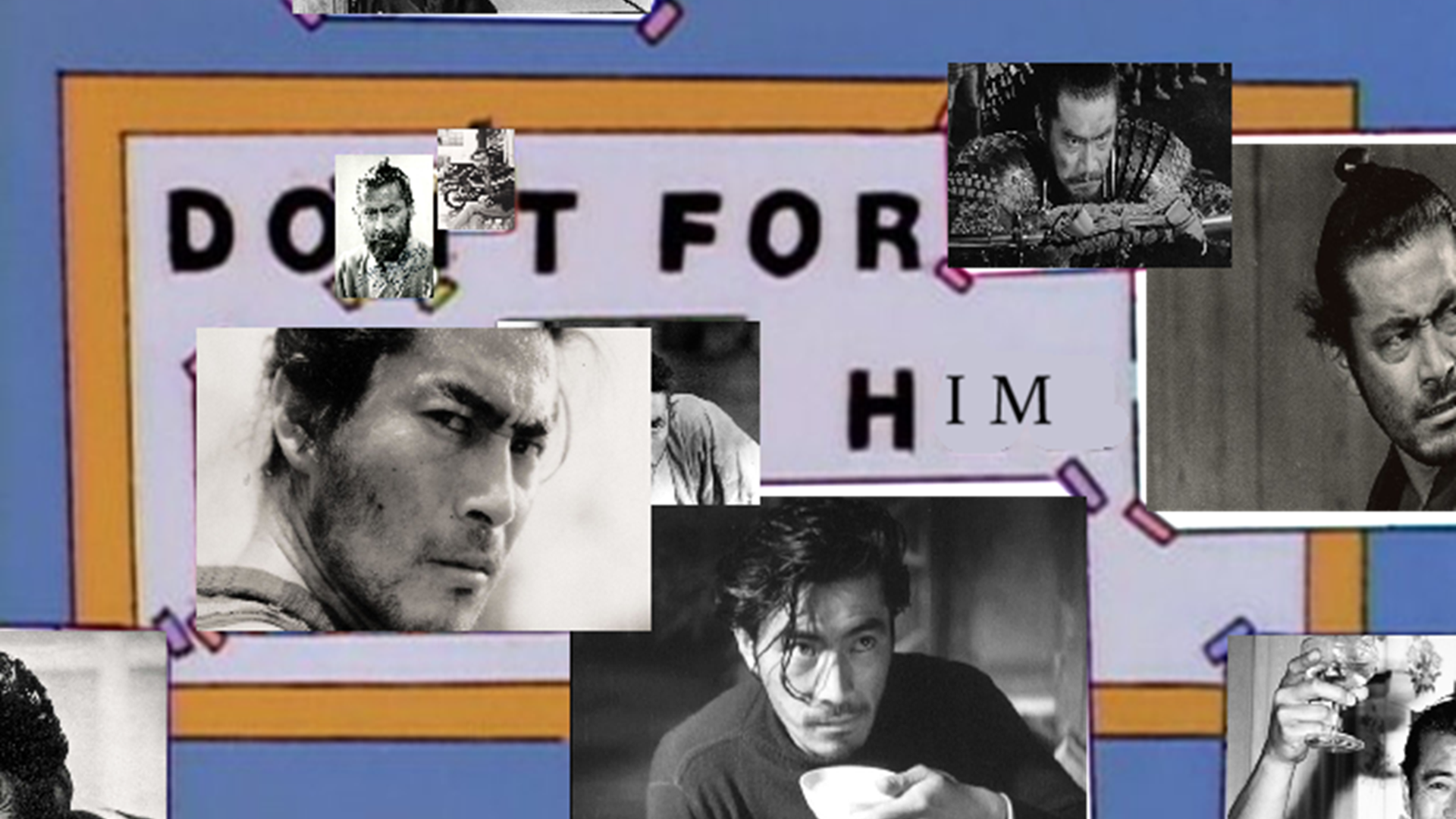
Each moment is pure Mifune and absolutely sells Musashi as a dirt-bag, goofball, anti-hero. I look forward to conversations around whether it is appropriate to bring back a dead actor like this, but for me the attention to Mifune’s mannerisms and film personas left me with the impression of a respectful tribute rather than a hollow facsimile.
Having fun cutscenes with engaging performances would mean very little if the combat was subpar, but that is not the case.
The objective in every fight, be it small minions or bosses, is to reduce their health or stability meter. Health reaching zero will trigger Musashi slicing through his enemy, and destroying the stability meter will trigger a kill in smaller enemies and take a large chunk of health off of the bigger ones.
On top of the basic combat options, there is a bow and a selection of special weapons that are powered by absorbing blue souls from enemies. Each of the special weapons have different effects like triggering burning effects, taking a chunk off the stability meter, or generating yellow orbs that can heal Musashi, this adds a small tactical layer to every fight about when to choose to use them.
Where it gets interesting is that there are 4 different defensive manoeuvres that have their advantages and drawbacks. Learning when to use dodges, parries, deflects, and special Issen counters is a precarious game. What struck me is that with this range of tools at the player’s disposal Onimusha could be overwhelming, but instead the dev team masterfully introduce them intuitively over the 20-hour playthrough.
Either a new enemy made me take advantage of one move, until it became like second nature, or I would unlock a new perk that shed new light on why I would want to use a certain riposte.
The game layers these lessons over each other like a carefully latticed combat pie. It felt so good to nail down a sequence and feel like I was a badass samurai.
Sure, there was a fair amount of swearing when it went wrong – but I never gave up because the elegance of every fight ended up being so satisfying.
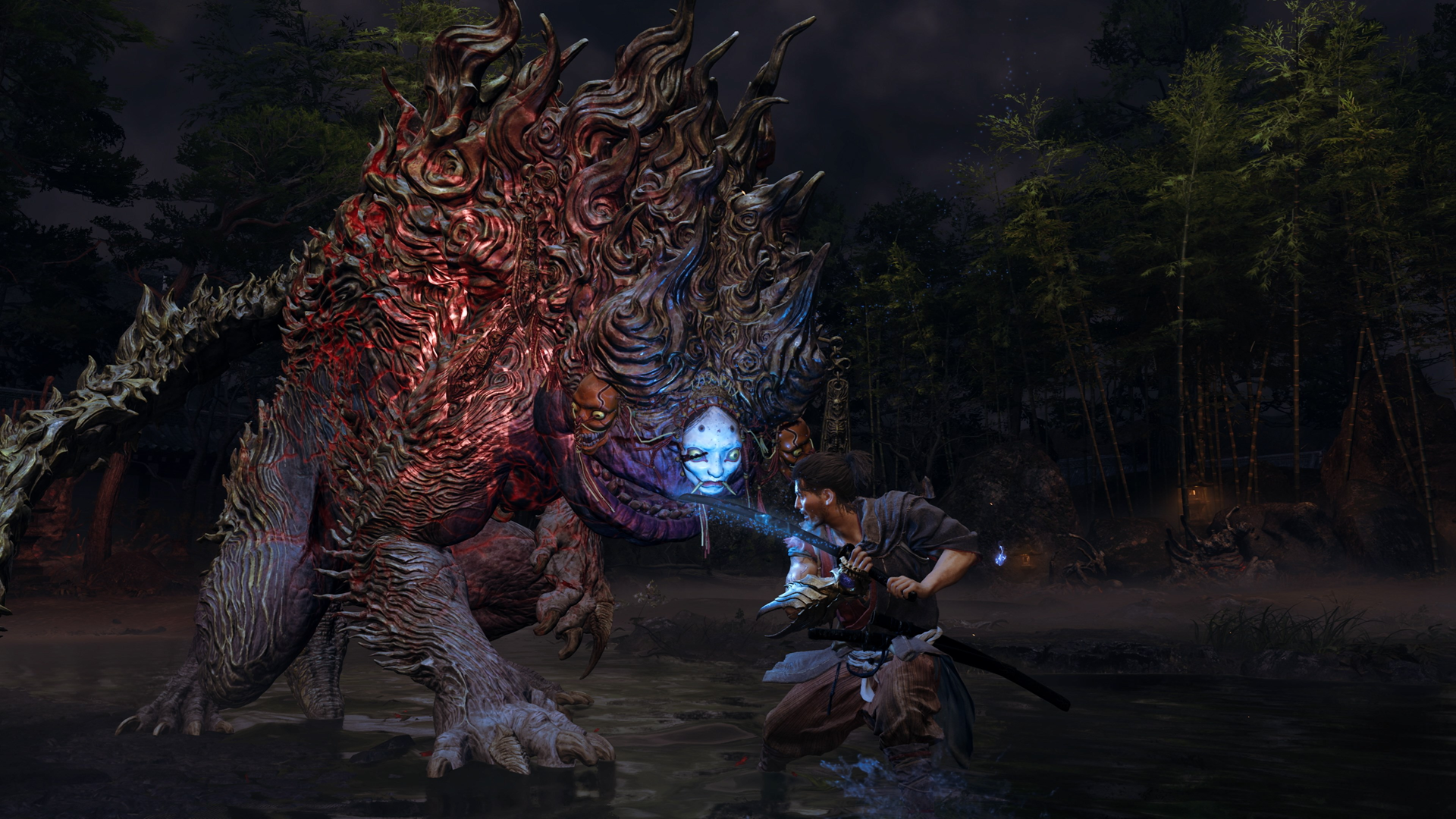
Every new boss is a joy to encounter too. They all handle differently, and their rhythms are fun to learn. From the half-hell-dog-half-snake monster, to the winged demon warrior, they were visually distinct and entertaining… Buuut…
Onimusha: Way of the Sword has plenty of ideas made fresh and new. It also has a couple of ideas that are less convincing.
The first time I saw a boss reskin in Bad Dudes vs. Dragon Ninja I was disappointed. The repetition cheapened the sense of discovery. I had a similar feeling the first time I had to replay a boss in Onimusha, some of them a recolouring of a previous boss with no other distinction. Admittedly, there was a certain level of accomplishment to wiping the floor with them now that I was more fully upgraded and also just more experienced with Mushashi’s toolset. The problem is that it was less rewarding the fifth time that happened.
Similarly, the open world setting is neat and adds lots of nooks and crannies to poke around, as well as some solid side missions that offer recurring characters and some perfect arched eyebrows from Musashi. That said, there are one too many ‘kill X number of Y enemies’ missions that only offer some upgrade materials and are padding to a game that doesn’t need it.
Even with these weaker elements Onimusha is a more than worthy experience. To have come back after all these years with a sequel to a long dormant franchise, and for it to honour its legacy while finding a voice for itself is a massive feat.
Capcom has released another banger.
Conclusion
Onimusha: Way of the Sword is a welcome return with combat as dynamic and expressive as its main character.
This game was reviewed based on Xbox S|X review code, using an Xbox S|X console. All of the opinions and insights here are subject to that version. Game provided by publisher.