

Give me a classically-inspired Resident Evil-like and I’m a happy man. Add in a few unique twists and I’m even happier. Heartworm does exactly this; while it’s not without niggles, I had a great time playing this retro survival horror title.
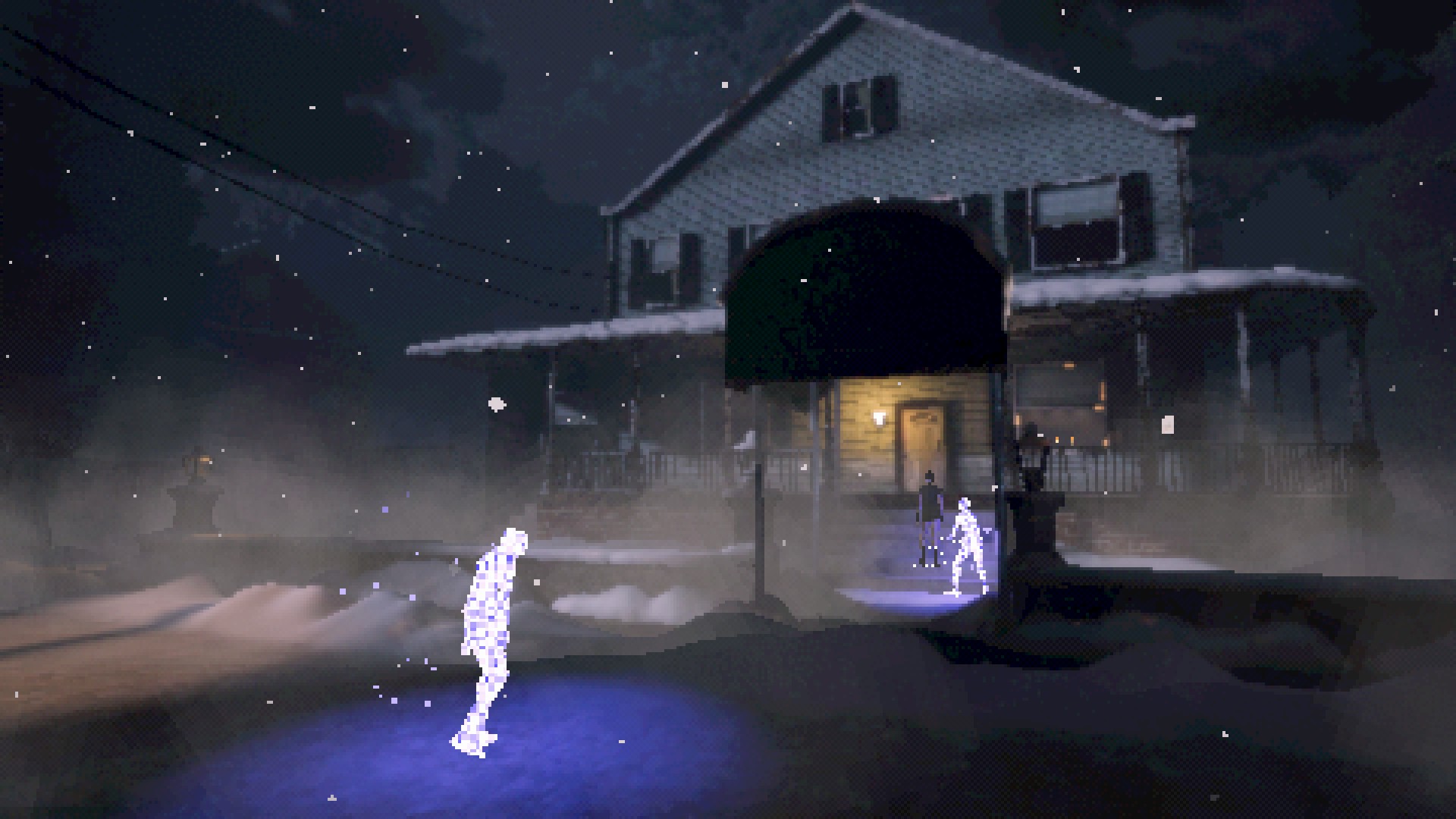
We play as Sam, a young lady in search of a way to reunite with her recently deceased grandfather. She leaves for a place that is perhaps beyond our mortal realm that she learned about in some online forums, and while knowing others have failed to return, she can’t help but pursue the knowledge and opportunities it could bring her. I must admit to not really getting all that invested in the story throughout as it felt a bit too sparsely explained, and when we did get dialogue or text notes I’m not entirely sure how it all fit together fully. The final area does answer some questions, but overall it’s not a tale that will live long in the memory.
Luckily, the survival horror aspect is far more successful. Anyone who has played the original Resident Evil’s or Silent Hill’s will feel at home here; (mostly) static camera angles, tank controls (optionally), item management and macguffin’s to collect to open new doors and areas are all present and correct. Sam isn’t loaded with an arsenal of weaponry though. Here, all she has access to is her trusty camera which luckily damages enemies with each snap she takes. Ammo is – of course – limited, but through my playthrough there was more than enough to get me by and past the final boss.
Heartworm is broken into several chapters, each within their own set area. Following traditional gameplay styling, we find locked doors, keys, and various environmental puzzles to tackle in each. These are well laid out, with even a few optional objectives to contend with if we find them. We have a map that is colour-coded to let us know where we are, where needs more exploration, and where is cleared out. I’d have liked it to be a bit clearer at times, mind you. We can’t see where we are in an area, only which area we’re in. While this harks back to the older games, small QoL improvements in 2025 wouldn’t have gone amiss. As it is, some of the more twisty locations can take a little longer to navigate because we’re not really sure which door we came in from. It also doesn’t differentiate between locked and open doors, again another handy touch that would have saved some backtracking.

Combat and exploration are enjoyable enough despite these niggles though. Sam’s camera is slow and has low range but most enemies will recoil long enough after one hit to let us get to safety. Fighting some of the latter Hunter-like enemies is probably the most challenging type of foe, but even then are still fairly simple to best – if we bother fighting them at all instead of opting to save the ammo. As mentioned above, tank controls – while optional – are present and correct, and are absolutely the way to play Heartworm. There are a lot of optional interactive aspects to find and read, and in some ways the game does improve on older mechanics; pushing crates is relegated to a button press, and we can stop as soon as the gap is big enough to let us through rather than have to push it all the way to the side. Small touches sure, but welcome all the same.
And while the story didn’t grip me, I did enjoy exploring the locations and trying to find the notes and extra items to flesh it out that bit more. The second area was a breath of (literal) fresh air in its design, while the final act leant so hard into Resident Evil inspirations there were rooms and layouts that were nigh-on identical to the original game, from the location of a safe room under some stairs with very familiar wallpaper design and music, to the simple setting of a slowly unravelling mansion. I went through this area and guessed what was through what felt like about 50% of the doors, so ‘inspired’ as it was by the Spencer Mansion. That’s not a knock by the way, it was really cool to see and made the already obvious inspiration plain as day.
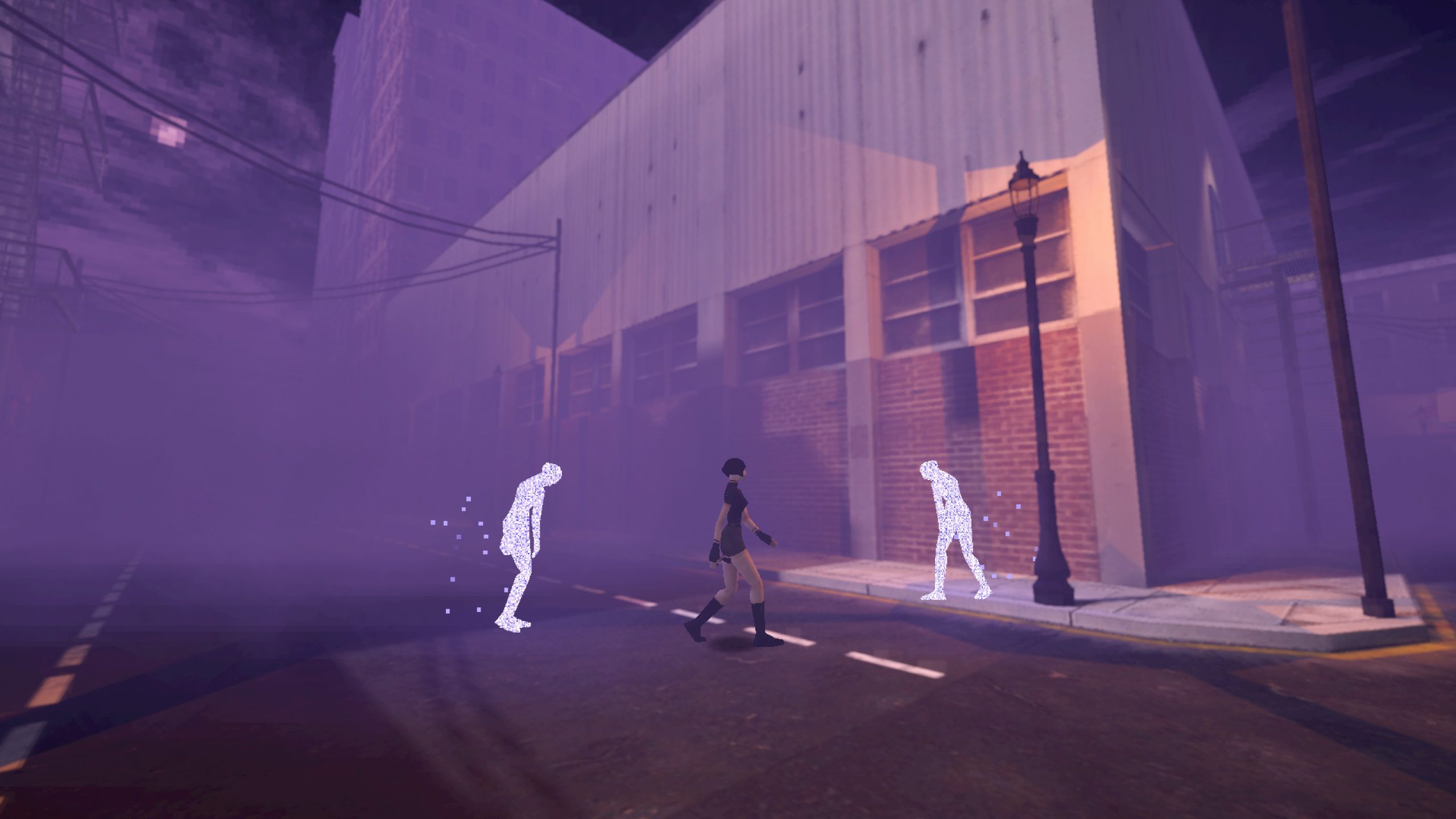
Helping to sell the retro feel are the visuals. We have two modes to play in, with one applying a heavy 32-bit filter over the screen and the other cleaning it up to Dreamcast levels of clarity. I initially preferred the 32-bit filter, but by the end of the game had swapped over as the later area felt far too obstructed by the filter in the little details (one fence that looked open with the filter on was plainly blocked with the cleaner presentation, for example). There’s also an option to have dithering on or off but this is far less noticeable in practice. Either way, Heartworm nails the aesthetic of those games I grew up loving, and looks brilliant.
What is less successful are the boss fights. They were always a tough moment in games of old, but here they’re just…bland. The first – against a giant spider – is the trickiest by virtue of it being more awkward to avoid damage than anything else. The remaining few are far too easy and feel a bit anticlimactic. Luckily they are over quickly, and the surrounding gameplay is enjoyable enough to make up for it.
Conclusion
Heartworm is a love letter to survival horrors of the 90’s, with a great look and feel that apes those older games brilliantly. Boring boss fights, an uninspiring tale, and some user interface niggles stop this being a full-hearted recommendation, but if you’re in the market for old school Resident Evil-like gaming, then this should fit the bill nicely.
This game was tested and reviewed on PC (via Steam). All of the opinions and insights here are subject to that version. Game provided by the publisher.Want to keep up to date with the latest Xt reviews, Xt opinions and Xt content? Follow us on Facebook, Twitter, and YouTube.


