When I first played The Witcher 3 back in 2015, I just could not gel with its feel and style. It took several patches, and a good few hours, for it to finally click with me. Coming from some of the same devs, The Blood of Dawnwalker harkens back to that 2015 mindset in multiple ways, but the most noticeable thing was the exact same feeling once again. I’m happy to report that the outcome is the same though; with a few QoL patches and a few more hours sunk into it, there is a lot to like about TBoD, even if it does feel like a relic of the past in some ways,
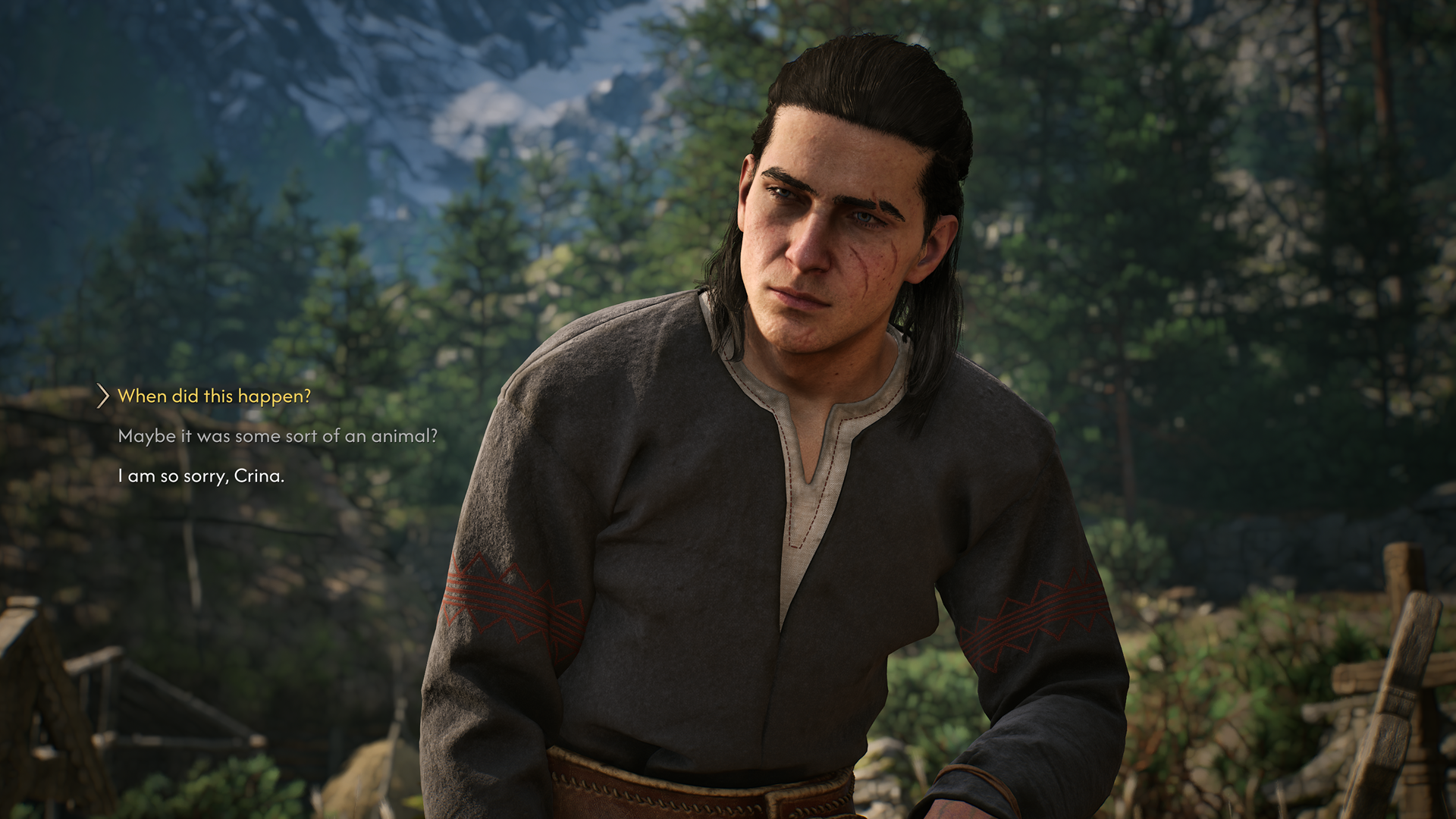
Probably key to this feeling is simply the presentation. Despite being made with Unreal, it has a certain Xbox One-era look and feel to the gameplay. Protagonist Coen is not quite as fluid in movement as we’d like, the world is huge but also feels slightly empty, and conversations feel less like natural dialogue between characters as a set of options before we choose the one that moves the story on.
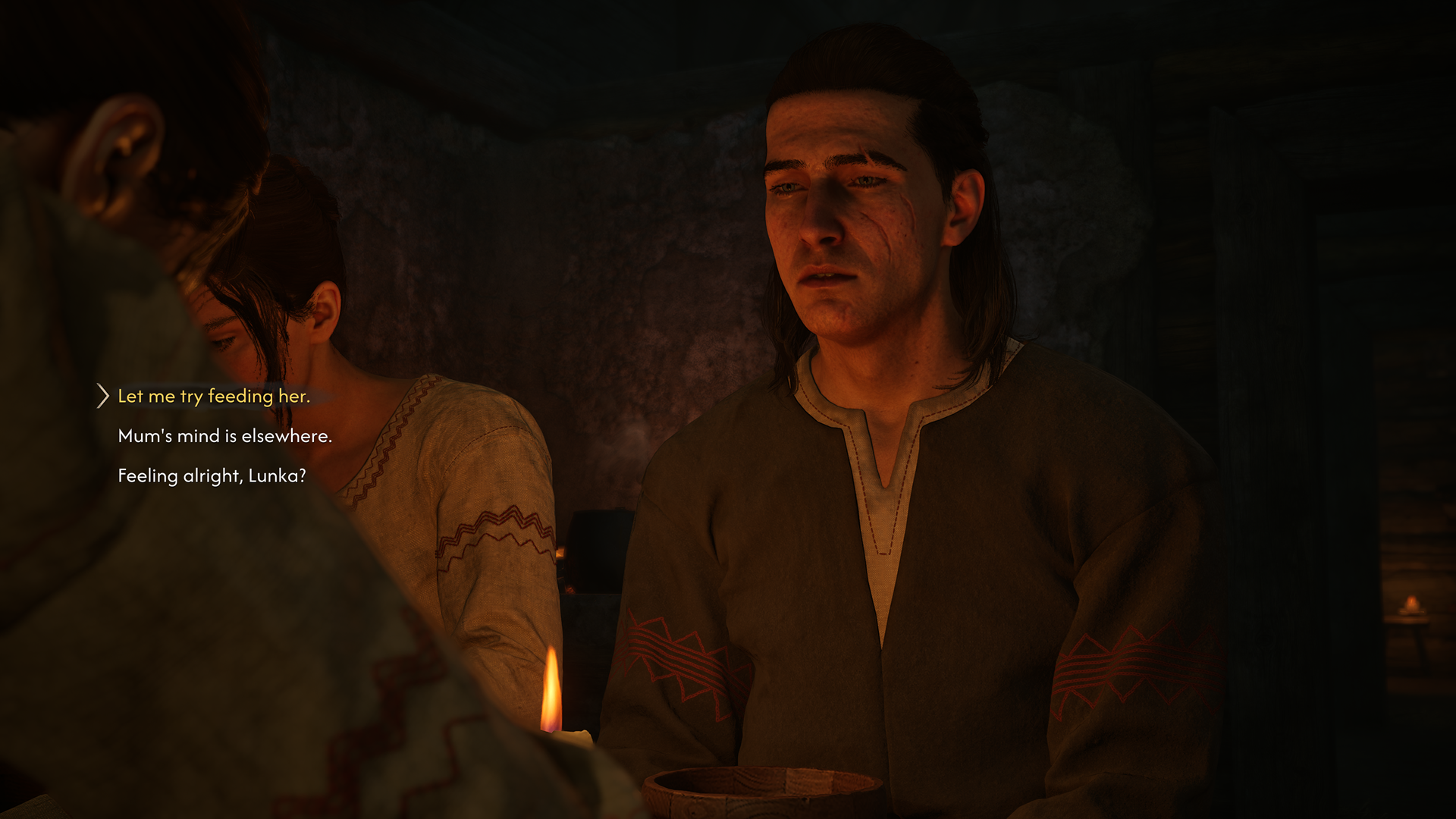
There is also a lot of information to parse and get on top of, from various powers and upgrades, to skill trees, perks, item buffs and debuffs, and more. On top of that, we need to contend with two different set ups for day and night exploration and combat. Again, it reminds me of The Witcher 3 in feeling a bit vague and overwhelming to start off with.
However, as mentioned, a few QoL patches have gone someway to help. Coen’s movement is still stiff but far better than at launch, and a 60fps update has made exploring noticeable smoother (though to be honest the 30fps mode is perfectly fine in my experience too).
And the more I play, the more I’m finding my groove in this vampiric adventure. Early on, I was being easily defeated by a pack of boars, yet as I grew I found even big bosses were no match for me. The general flow of exploration is pretty standard – go to a quest marker, get told to go somewhere else, fight something, and come back – but it is fleshed out a little with Coen’s investigative mode, allowing him to see key items or details. The same goes for the overworld exploration, and while there’s not a great deal that really stands out, it is fun all the same to explore and find extra quests or locations to explore.
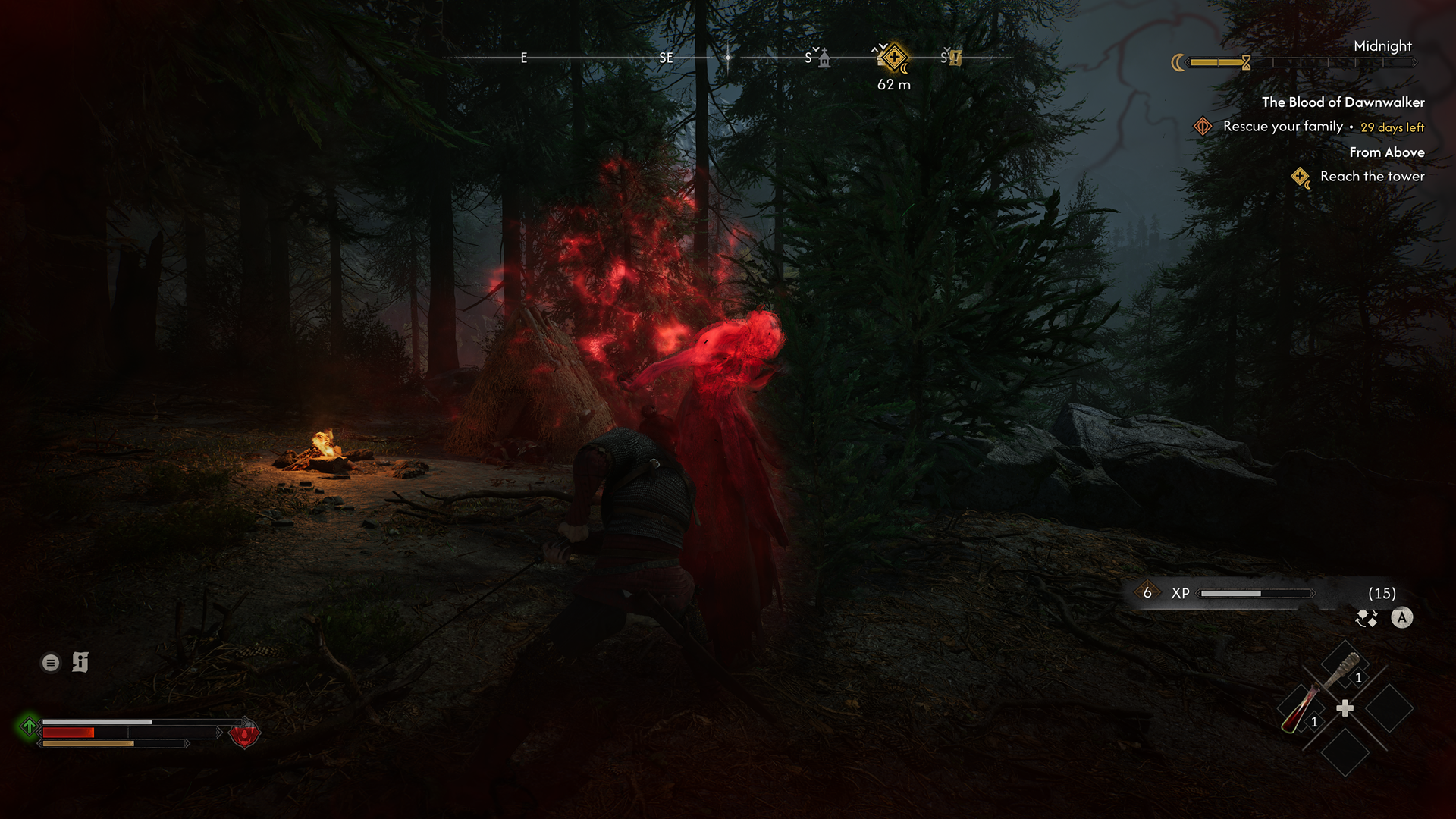
The main USP of The Blood of Dawnwalker is in its dual character set up. After a slow opening area where we’re introduced to the big baddies in Brencis and his vampire crew, Coen is converted during a large battle. Well, partially converted. Most simply turn into vampires outright, but Coen becomes a Dawnwalker, someone who is human by day and a vampire by night.
This lends the game a slightly different feel in the two times of day. When the sun is up, Coen can explore and fight with sword and witchcraft abilities, the latter of which are gradually learned as we level up and find tomes containing them in the world. By night, his blood lust takes over and he gains huge claws to fight and kill with. In practice, both combat style feel largely similar, with the main difference being the additional powers available to us. His vampiric abilities can only be unlocked by downing blood, but doing so will also cause corruption to rise. Coen can source this blood from enemy soliders or animals, but should we neglect his needs for too long we might find we lose control of his urges. In a conversation with an NPC, the dialogue options might flicker between replies and one that says ‘give in to the hunger’. Press this – accidentally or not – and Coen will devour whoever is in front of him. It’s an interesting way to represent the little devil on his shoulder, begging him to give in to his urges, and it can make some encounters truly tense as we try not to accidently feast on a quest giver or random passerby.
The core idea in TBoD is to get to Brencis, kill him, and save Coen’s family. To do this, we have several of his right hand vamps to kill first – or not, we can simply go to Brencis from the off if we’re feeling hard enough. To get to his guards, Coen must anger them sufficiently by disrupting their home base and supplies. This might mean freeing prisoners, killing guards, or destrying stockpiles of blood before it can be shipped out. Anger one enough and they’ll challenge Coen to a fight to the death.
One aspect of this, and the story as a whole, that I do like is in its recognition of player actions. We can find key items before we speak to the right quest giver, or other quests will change depending on how long we take to do them. The game is set over 30 in game days, and time only passes when we complete certain actions. For example, speaking to a character might progress time one slot (there are 10 per day/night), whereas exploring a base camp might move it on by three in one go. As such, we can’t complete every quest given even though we can explore as much as we like without losing any time. One early fight requires us to offer up a poisoned person for feasting, knowing it’ll weaken the drinker. But leave it too long and the poison will no longer work. And even in the opening, our main goal is to get some medicine for Coen’s mother, but it’s perfectly possible (because we did it) to not even start this quest until it’s too late because we got sidetracked with half a dozen other quests.
It might sound frustrating to completionists, but it really forces us to focus on what we want to do with Coen, and not just be the hero to all that most RPG characters end up being.
Conclusion
In some ways, The Blood of Dawnwalker feels a bit old-school in its design, but once we settled into its rhythm, we found a satisfying, if slightly clunky RPG that is well worth a recommendation from us. The time limit means we can’t be the all-in-one hero, and there’s a story here that…ahem..sank it’s fangs into us early on.
This game was reviewed based on Xbox S|X review code, using an Xbox S|X console. All of the opinions and insights here are subject to that version. Game provided by publisher.